ADHD, Improving Food Access and Cyclical Eating
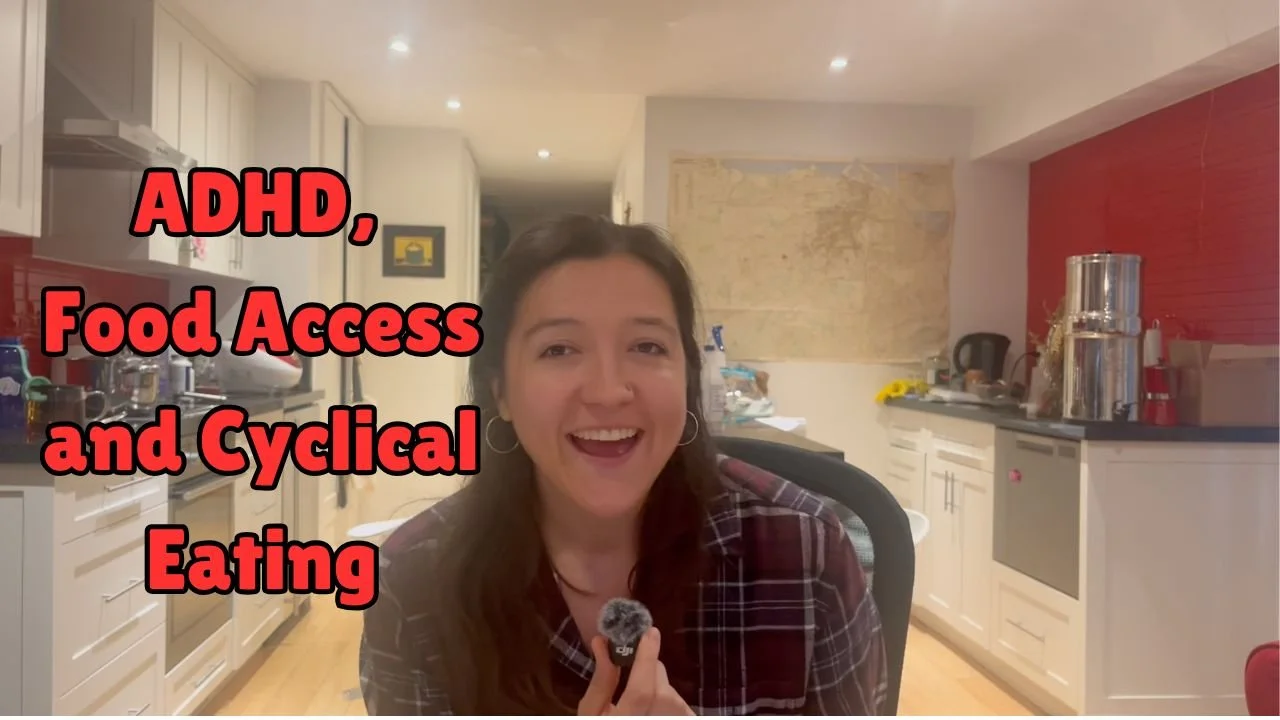
This blog is a summarization from my latest Youtube video! I feel like the framework of the blog does a good job at organizing and summarizing what I’m saying in the video, but you’ll probably also get a lot out of watching it as well! (Maybe even in 1.5x speed - a setting invented for people with ADHD). Click here to watch it on Youtube
In my last blog post, I talked about why it’s so hard to motivate yourself to eat when you have ADHD — not just to eat healthy, but to eat at all. Even though eating is something we have to do every day, it can feel exhausting, overwhelming, and complicated.
In this post we’ll dive into practical strategies for improving your motivation and ability to eat regularly with ADHD — in ways that reduce stress, not add to it.
Why Eating Can Feel So Hard When You Have ADHD
(You’re not lazy — your brain works differently)
Before jumping into strategies, let’s recap why ADHD makes eating hard for so many people.
1. Different Brain Chemistry
ADHD brains are wired differently. The motivation pathways involving dopamine and reward don’t function like they do in neurotypical brains. This means tasks like planning meals, cooking, or deciding what to eat can feel like climbing a mountain — not because you don’t care, but because ADHD and dopamine make sustained motivation difficult.
2. Overwhelm and Burnout
Many ADHDers live in constant mental fatigue or burnout. Cooking, grocery shopping, and cleaning each require multiple executive steps, which is a recipe for overwhelm — literally.
3. Low Interoceptive Awareness
ADHD often comes with low interoceptive awareness, which means not noticing body cues like hunger or fullness until it’s extreme. If you don’t realize you’re hungry until you’re dizzy, it’s nearly impossible to plan ahead or make nourishing choices.
4. Decision Fatigue
There are so many options for what to eat that it can cause decision paralysis. This is why people with ADHD often skip meals or reach for quick, low-nutrition snacks — the executive dysfunction around eating can make decisions feel impossible.
5. Sensory Issues and Food Intolerances
Many ADHDers also deal with sensory sensitivities (textures, smells) and higher rates of gut issues and food intolerances. These make consistent eating even harder and can lower overall motivation to eat.
Step One: Improve Your Access to Food
Think of your meals and snacks in three levels, based on your energy, time, and capacity.
This framework gives structure without rigidity — something people with ADHD need. It respects that your energy and focus fluctuate daily, and often cyclically if you menstruate.
🌱 Level 1: Low-Effort Meals for ADHD
When your energy or executive function are low, your only goal is to fuel your body and brain enough to keep going.
Think of this as harm-reduction for hunger. Not eating for long stretches — something common in ADHD — worsens brain fog, irritability, and focus problems.
Level 1 meals should take under 10 minutes and require minimal effort.
Examples of low-effort meals for ADHD:
Bagel with peanut butter (protein + carb = sustained energy)
Crackers with hummus or cheese
Microwaved edamame with salt
Fried or boiled egg with toast
Smoothie with protein powder and frozen fruit
🧩 Tip: Write a list of your ADHD meal ideas and keep it on your fridge. A visual list reduces decision fatigue and helps you remember foods you actually enjoy.
🍳 Level 2: Medium-Capacity Comfort Meals
Level 2 meals take 20–30 minutes and a bit more energy. They’re often your comfort foods — simple, familiar, and satisfying.
Examples of easy meals for ADHD:
Pasta with sauce and a protein (edamame, tuna, or egg)
Quesadilla or grilled cheese with veggies
Fried rice with tofu or chicken
Soup with bread and a side salad
Aim to combine two macronutrient groups (protein + carb, or fat + fiber) for steady energy.
🍲 Level 3: ADHD-Friendly Meal Prep
These are your high-capacity or batch-cooking days — meals that take longer than 30 minutes but pay off later.
When your energy’s high, lean into ADHD meal prep or batch cooking. It’s an efficient way to create make-ahead meals for ADHD that become easy Level 1 options later.
Examples:
Chili with beans, beef, and veggies
Curry or stew with rice
Sheet-pan dinners
Batch-cooked pasta sauce for freezing
Once cooked, these meals transform into grab-and-heat options for low-energy days — your future self will thank you.
Syncing Your Eating Patterns with Your Menstrual Cycle
If you have a menstrual cycle, try combining these three levels with your cycle-syncing nutrition for ADHD.
Follicular phase (after period): Higher energy = best time for Level 3 cooking or batch meals.
Luteal phase (before period): Lower energy = lean on Level 1 and 2 foods.
Your cycle is a built-in energy map — using ADHD cycle-syncing nutrition helps you anticipate changes in appetite, energy, and mood while supporting hormonal balance.
Building Self-Compassion into the Process
It’s easy to feel frustrated because having to eat everyday is a lot of work and can be really challenging, especially for neurodivergent people. But remember:
Our current food system, diet culture AND most of wellness culture weren’t built for neurodivergent brains.
You’ve probably internalized confusing or restrictive rules about food.
Learning to feed yourself consistently is a skill — not an instinct.
Start small, be kind to yourself and take pressure off wherever you can.
Practicing intuitive eating with ADHD is about meeting yourself where you are — not striving for perfection.
Your Next Step
Grab a piece of paper or open your notes and write down:
Level 1 foods: quick, very low-effort options
Level 2 meals: easy comfort foods
Level 3 meals: batch or make-ahead meals
Stick it on your fridge or pantry door.
And if this resonated, subscribe to my YouTube channel or follow along for more neurodivergent nutrition strategies that make eating with ADHD easier and less stressful.