Understanding Stress Eating: Tips for Managing Emotional Eating with ADHD
Ever found yourself standing in front of the pantry, reaching for a bag of chips after a brutal, overwhelming day?
Stress eating is incredibly common. But if you are neurodivergent, there is a lot more going on beneath the surface than just "eating your feelings."
As an ADHD nutritionist and intuitive eating counsellor, I see folks struggle with ADHD and emotional eating all the time. Let's break down some of the reasons why your ADHD brain defaults to food when you’re overwhelmed, how your menstrual cycle impacts these cravings, and how to stop stress eating with ADHD using realistic, actionable steps.
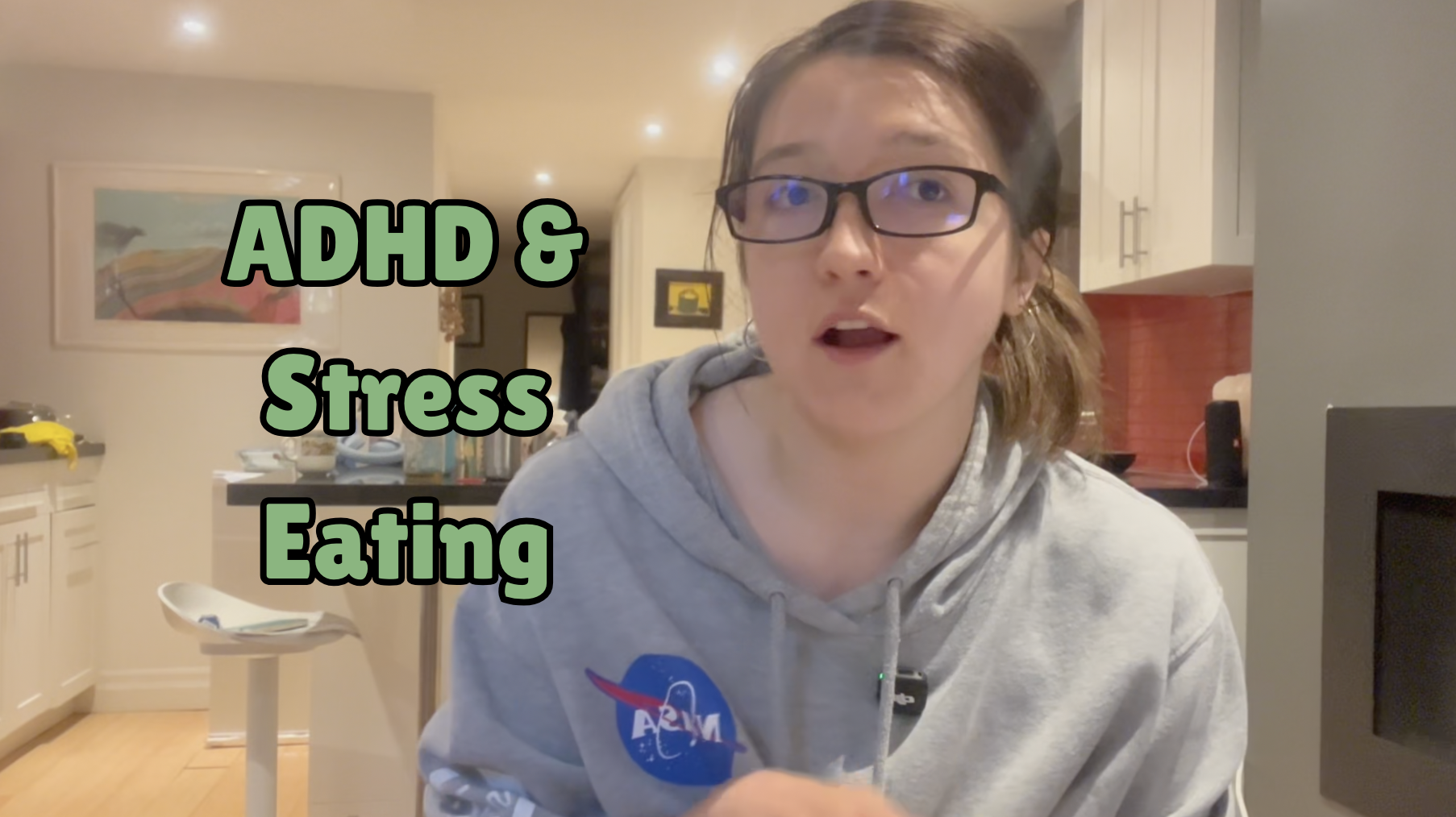
This blog post is adapted from my latest YouTube video — check it out here!
Why the ADHD Brain Defaults to Stress Eating
When you have ADHD, you’ll likely often experience higher levels of daily stress just from trying to navigate a world built for neurotypical brains. When stress peaks, your brain looks for the fastest exit ramp.
Here are three massive reasons why ADHD binge eating and stress eating happen:
1. Eating is a Form of Stimming
Stimming (self-stimulatory behaviour) isn't just for autistic individuals—people with ADHD do it too! Stimming is simply a repetitive motion used to self-regulate when you are overstimulated or under-focused.
The physical act of bringing food to your mouth is a highly accessible, repetitive action.
In short: Eating can be a stim to help your brain cope with stress.
2. The ADHD Dopamine Craving
When you stress eat, you probably don't crave broccoli. You crave cookies, chips, pizza, or bread. Foods high in sugar and simple carbohydrates give your body immediate energy and your brain a quick hit of dopamine. Because these foods lack fiber and protein, your digestive system converts them into glucose instantly.
The Trap: This quick fix gives you a few moments of relief, but it is followed by a massive blood sugar crash, low mood, and physical discomfort.
3. Diet Culture and Shame
We live in a world that ties our morality to our food choices. You are not "bad" for stress eating. Stress eating is simply your body trying to get immediate energy to be able to respond to that stress.
The Menstrual Cycle & ADHD Stress Eating
If you have a menstrual cycle, there is another layer to the puzzle.
During your luteal phase (the week or two leading up to your period), your hormone levels drop drastically. This shift significantly worsens ADHD symptoms, making managing impulse eating much harder.
Here is the missing piece of information most people don't know: Your body actually requires significantly more energy before your period. If you don't intentionally feed your body enough calories, protein, and complex carbs during this time, your brain will compensate by contributing to the drive to binge eat and stress eat. When the body isn’t getting the adequate energy its needs through nutrition, especially before your period, this energy deficit makes PMS and PMDD symptoms a lot more severe, which creates a lot more stress, making stress eating almost impossible to avoid.
3 Realistic Tips to Manage ADHD Emotional Eating
If you want to improve your relationship with food and reduce stress eating, you don't need a restrictive diet. Instead, try these three ADHD-friendly shifts:
Improve Interoception
Interception is your brain's ability to recognize internal body signals—like hunger, fullness, or the need for rest. Many neurodivergent people struggle with this.
To build this skill, practice pausing to check in with your body before you reach for food.
Ask yourself: Am I physically hungry, or is my brain just under-stimulated and looking for a dopamine hit?
2. Add, Don't Subtract (Balance Your Blood Sugar)
Don't try to banish your favorite comfort foods; that only increases the shame cycle. Instead, focus on keeping your blood sugar levels stable by adding protein, fat, or fiber to slow down digestion.
Craving chips? Eat them with hummus or guacamole (fiber & healthy fats).
Craving a sweet snack? Pair it with a hard-boiled egg or a piece of cheese (protein).
The Golden Rule: Try not to go more than 3 to 4 hours without eating. Going all day without food completely destroys your impulse control by nighttime.
3. Track Your Cycle
If apps overwhelm you, just use your phone or wall calendar. Mark "Day 1" on the first day of your period and count forward.
If you hit Day 23 and suddenly feel overwhelmed, anxious, and desperate for sugar, you can look at your calendar and realize: "Ah, I'm in my luteal phase."
This awareness removes the guilt and allows you to proactively eat more filling, nourishing meals to support your hormones before the cravings hit.