Why Intuitive Eating is Actually Perfect for ADHD (With a Few Modifications)
This blog post is also in VIDEO form on youtube check it out and like and subscribe pls: https://www.youtube.com/watch?v=NFmjMPRvpck
"Intuitive eating is not for people with ADHD."
↑ is a claim that gets thrown around a lot on the internet.
As an intuitive eating counselor, a nutritionist, and someone who has ADHD … in my opinion that claim is not true.
Just like most frameworks built with a neurotypical approach in mind, standard intuitive eating doesn’t always take neurodivergent brains and ways of doing things into account - which just means we need to make a few realistic modifications to make it more accessible.
What is Intuitive Eating???
Intuitive eating is an adaptive eating style ~ the keyword here is adaptive.
Even though there are 10 core principles of intuitive eating, you don't need to follow them in a strict and linear way, but more so as an on-going practice and process.
The Anti-Diet Origins
Intuitive eating was developed in the 1990s by two dietitians, Evelyn Tribole and Elyse Resch. They created it as an intentional response to the toxic diet culture of the era, which constantly tied a person's worth and value to their body size.
While the messaging looked a bit different back then (think brutal supermarket magazine covers calling out specific parts of people’s bodies etc), the same insidious pressure exists today through social media and the modern wellness industry. Intuitive eating remains an intentionally anti-diet framework designed to help you improve your relationship with food. Plus, if you love science, you'll be happy to know there are hundreds of studies proving that intuitive eating significantly improves both physical health and emotional well-being.
ADHD Hurdles: Interoception and Hunger Signals
One of the biggest reasons people claim ADHDers can't practice intuitive eating comes down to a concept called interoception.
Interoception is your brain’s ability to recognize and understand the internal sensations your body is sending—like knowing when you need to use the bathroom, when you're tired, or when you're hungry.
And people with ADHD often have lower interoceptive awareness.
Because our brains process stimuli differently, we have a much harder time recognizing standard body signals. This is why you might suddenly realize you’re starving, dizzy, and completely exhausted at 4:00 PM without having felt a single stomach growl all day.
Instead of waiting for a growling stomach, an ADHD approach looks out for other signs of your body needing fuel through food, such as:
Sudden brain fog or a drop in focus
Spikes in irritability and emotional dysregulation (aka being hangry)
Dizziness, fatigue
Thinking about food
Heightened physical and/or emotional sensitivity
By expanding our understanding of these body signals, over time we can actively improve our interoception and learn to nourish ourselves more reliably.

The mind body connection…. (the mind only pictured here)
Balancing Internal Cues with External Realities
Intuitive eating isn't just about what's happening inside your body - it also considers your external reality. This is where we look at the practical, daily logistics of navigating food with ADHD, alongside the larger societal systemic factors that impact how we eat and exist as neurodivergent people.
Practical ADHD Accommodations
This means looking at the barriers built into our immediate environments. When practicing intuitive eating with ADHD, we need to adapt our environments by looking at:
Kitchen Organization: Is your kitchen set up in a way that makes cooking overwhelming or overstimulating?
Logistics and sensory realities: How can you get groceries without getting overstimulated or burn out?
Proactive Scheduling: If you have a three-hour meeting or a hyper-focus block where you know you won't be able to stop and eat, intuitive eating could be deciding to proactively eat beforehand so you don't crash later (even if its something small)
The above are just a few examples… Basically this step comes down to making nutritious food more immediately available by removing as many barriers to that as possible.
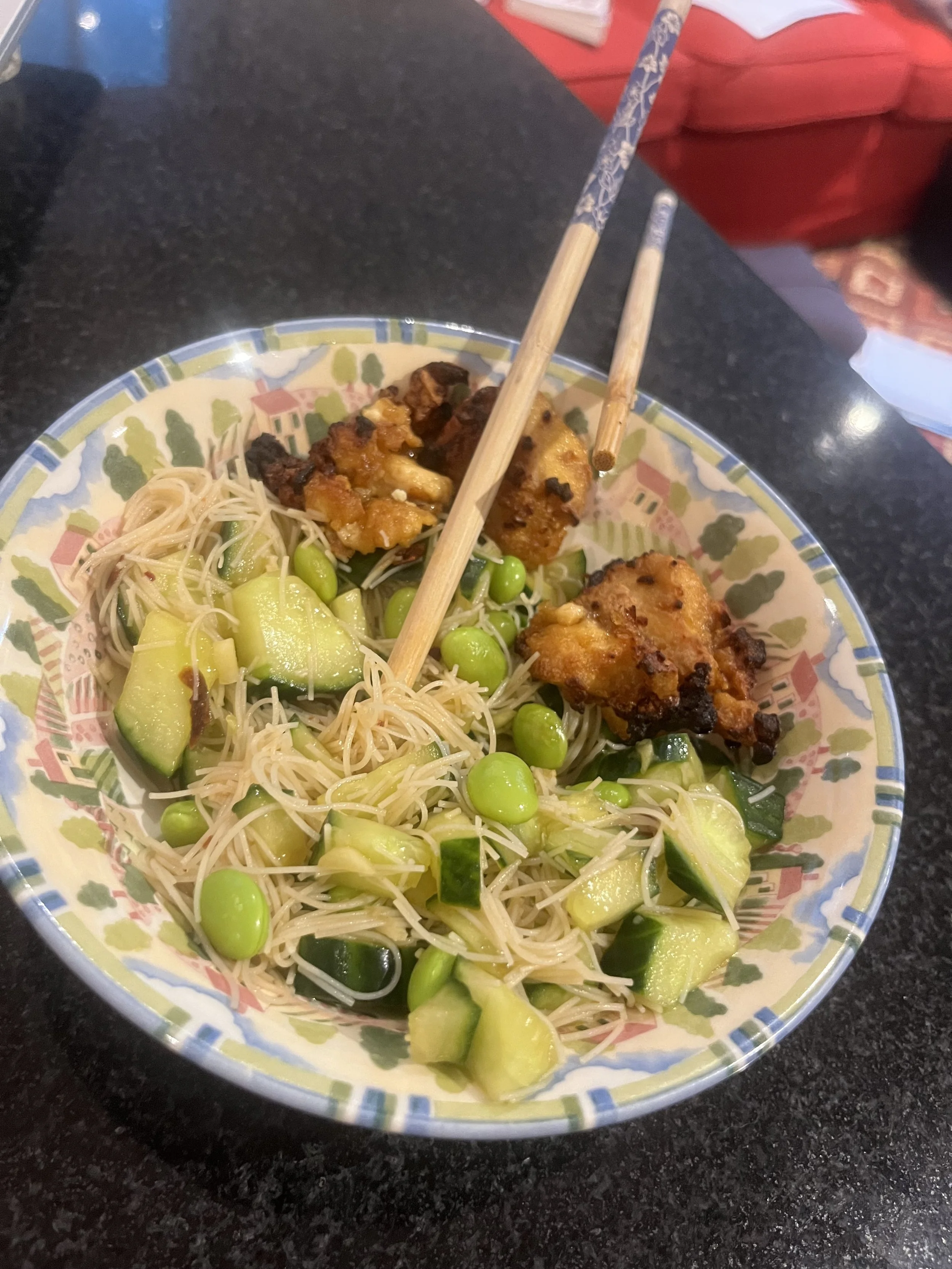
Here I removed barriers to actually eating a balanced meal by using rice noodles that only need hot water to cook for a few seconds, an air fryer with tinfoil to cook my tofu fast and also so the clean up is minimal, a microwave to heat frozen edamame that I can eat whenever and not worry about going bad because its frozen, and a few sauces that were either premade or very low effort for me to put together so it all tasted good.
Food Access and Ablelism
On a broader level, external realities that also create barriers between people with ADHD and being able to access nutritious food regularly include all the socio-political systems we live in—like capitalism, patriarchy, ableism, racism and so many others.
By creating and maintaining the marginalization of multiple communities, one of the things that these systems dictate is who has access to nutritious food and who doesn't. Living in a society that was built for neurotypical people means that neurodivergent people will have a much harder time being able to access basic necessities needed for survival - food being an example.
These systems are also the exact same systems that allow the diet industry to thrive by making people feel so unworthy and like it is their moral responsibility to change the way their body’s look, regardless of what this means for their health. An authentic intuitive eating practice acknowledges these barriers rather than ignoring them, because we can’t have a world without diet culture, something that intuitive eating actively works towards, without working towards destabilizing these systems and building better ones that actually support our health (physical and mental) and all communities.
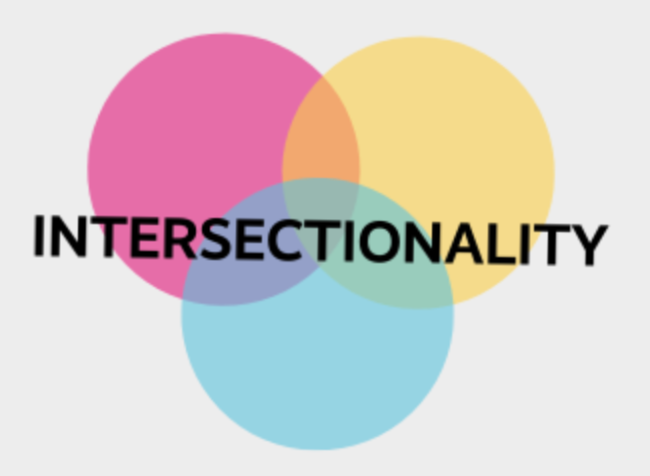
Learning about and challenging all the different systemic factors that create and maintain any form of marginalization and how their existence is so deeply dependent on ableist systems that create barriers for people with ADHD, as well as patriarchal beauty standards that allow the diet industry to exist and thrive at the expense of millions of people’s health - is also an essential part of an intuitive eating practice.
Satisfaction
Another major foundation of intuitive eating is finding satisfaction in the foods you eat. This means allowing yourself to genuinely enjoy your food’s flavours, textures, using food as a way to connect with your culture other cultures and communities, and giving yourself permission to allow what you eat to improve the quality of your life.
When many people, especially with ADHD, hear "give yourself permission to eat what satisfies you," a common response is, "If I do that, won't I just binge on high-sugar, highly processed foods for the quick dopamine hit?"
It makes complete sense why that fear pops up. But here is how intuitive eating actually helps break that cycle:
When you combine satisfaction with better interoception, you start to notice how foods actually make your body and brain feel long-term. Yes, a highly processed, sugary snack gives our ADHD brains a dopamine boost for a few minutes. But as an intuitive eater, you'll start to recognize the pattern that follows: the energy crash, the brain fog, or the uncomfortable physical fullness.
Over time, you learn to choose foods based on true satisfaction—combining foods so you get the taste you enjoy and the sustained, long-term energy your brain needs to function.
Making Intuitive Eating Work for You
If I’m being honest one of my favourite things about intuitive eating is how adaptive, fluid and flexible the framework is.
In this day and age I find it reallllly hard to find frameworks or groups with tools that help improve our health and quality of life that don’t use cult-adjacent dynamics.
And the reality that intuitive eating encourages you to take what you need, when you need from its set of 10 principles and make them work for you is so reassuring to me because ideologies that don’t give you that autonomy are huge red flags and probably best to be avoided, as well as just not aligning with what it means to be neurodivergent and often needing alternate modifications.
There are so many different factors that make us neurodivergent, so having a framework for eating that in many ways can be modified and shaped around your specific needs is so cool and a key reason why intuitive eating is such a great tool for supporting ADHD.